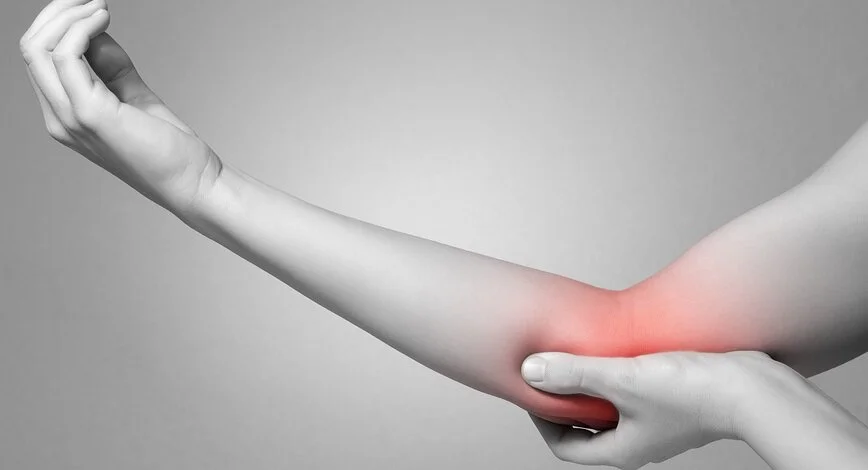
Sometimes life throws you a curveball and the past few weeks has been one of those times for me. I was out on a run in the rain, slipped on some wet leaves and fell. I got up, dusted myself off, and kept going. It wasn't until I had finished running that I realized something was wrong with my arm. I could lift it above my head, I could extend my fingers but I couldn't rotate it. A doctor visit and a set of X-rays later I found out that I had fractured the head and neck of the radius bone of my right arm. I was so disappointed because not only would I not be able to knit but running was also off the table until the fracture heals. I was actually scheduled to run a virtual marathon two days later but had to walk the race instead (I was able to finish in just over seven hours).
Like many people, I am right-hand dominant which means that I struggle when I have to use my left hand exclusively. So what was I to do? At first I wasn't sure and honestly, I felt really sorry for myself. I was taking time off from work and suddenly had all of this down time and limited concentration for anything. Basic tasks were suddenly not so simple and took so much longer to complete. I felt lonely and lost. So like many others with too much time on their hands I turned to the internet.

Headband
Garter stitch on size 11 needles
Thankfully there was no shortage of videos to inspire my creativity and whip my self-pity into shape. I encountered several videos created by fiber artists who were amputees and had to use adaptive equipment to knit with one hand. One utilizes a knitting belt which lays across the waist and allows the wearer to rest a double pointed needle into one of the holes in the belt. She also uses a knitting clip which can be pinned to her clothing and allows the wearer to hold tension on the yarn without a second hand. Others have adapted different knitting Styles particularly Portuguese knitting traditions placing the working yarn around the neck to assist with tension. Trying out some of the techniques they've adapted gave me a greater appreciation for their courage, fortitude, and perseverance. The best that I was able to do was rest my right needle in my slang and use both hands more evenly once the swelling in the arm went down enough that I could use my hand.
What I can now share with you is a YouTube playlist of videos about different fiber artists, the history of knitting and weaving, the intersection of fiber arts and social justice, and even adaptive techniques in knitting. You can find a link to that playlist here. I also added to my Pinterest boards about fiber arts, knitting/crochet patterns, and art therapy directives.
Please feel free to comment below with videos or links that are inspiring your fiber arts projects.